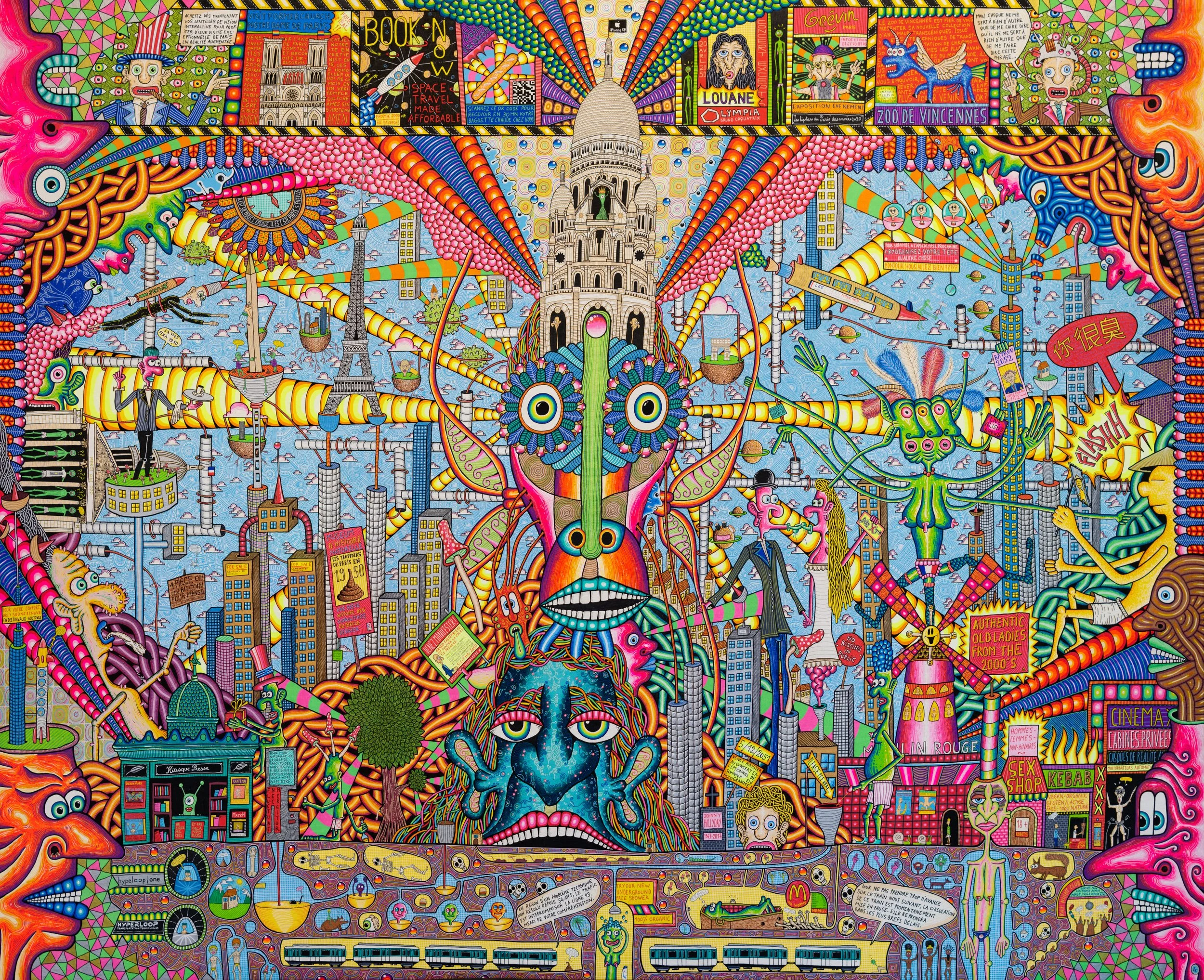
The composition is dense and labyrinthine. This visual fragmentation calls to mind the world of Where's Wally?, but takes the exercise further: the point is not to find, but to get lost. The artist invites a slow, almost meditative immersion into a hyper-referenced chaos.
We want to laugh at the absurd scenes, the zany dialogues, the incongruous situations. Yet beneath the surface, a fierce critique emerges: consumerism, overproduction, the dehumanisation of work, the eroticisation of children's imagery. The work oscillates between burlesque and unease, creating a constant tension.
For Léonard Combier, painting is an act of resistance. Resistance to emptiness, to speed, to simplification. He champions an aesthetic of overload (visual, narrative, cognitive) that forces the viewer to slow down, to scrutinise, to engage. The line is sharp, precise, almost obsessive; the garish colours form a dissonant harmony that blows up the codes of good taste. One might call it a "contemporary baroque", where every corner becomes a micro-narrative, a provocation, a wink at the absurdity of our times.
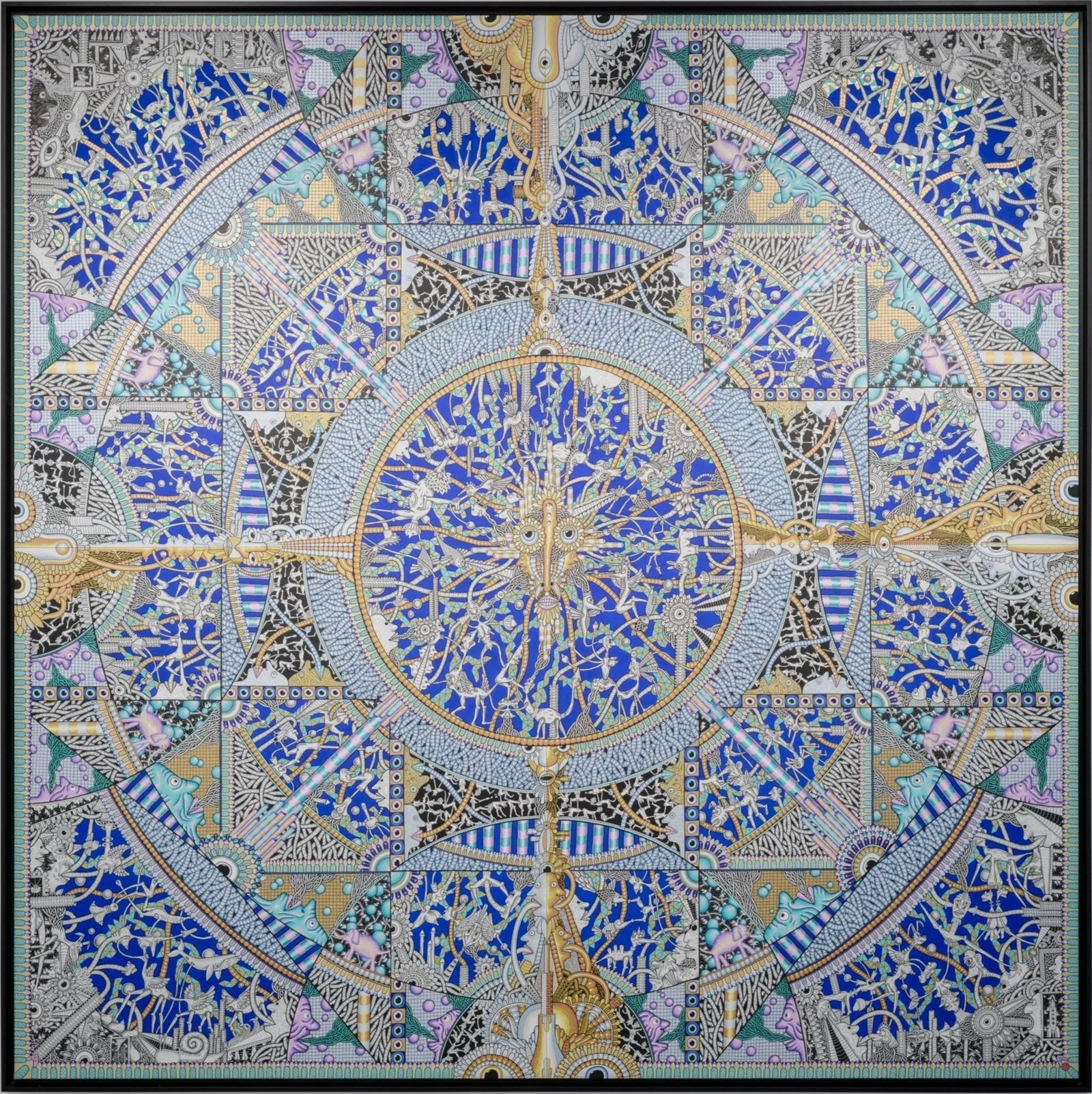
Untitled, 2024 Acrylique, Poscas and ink on canvas 200x200cm
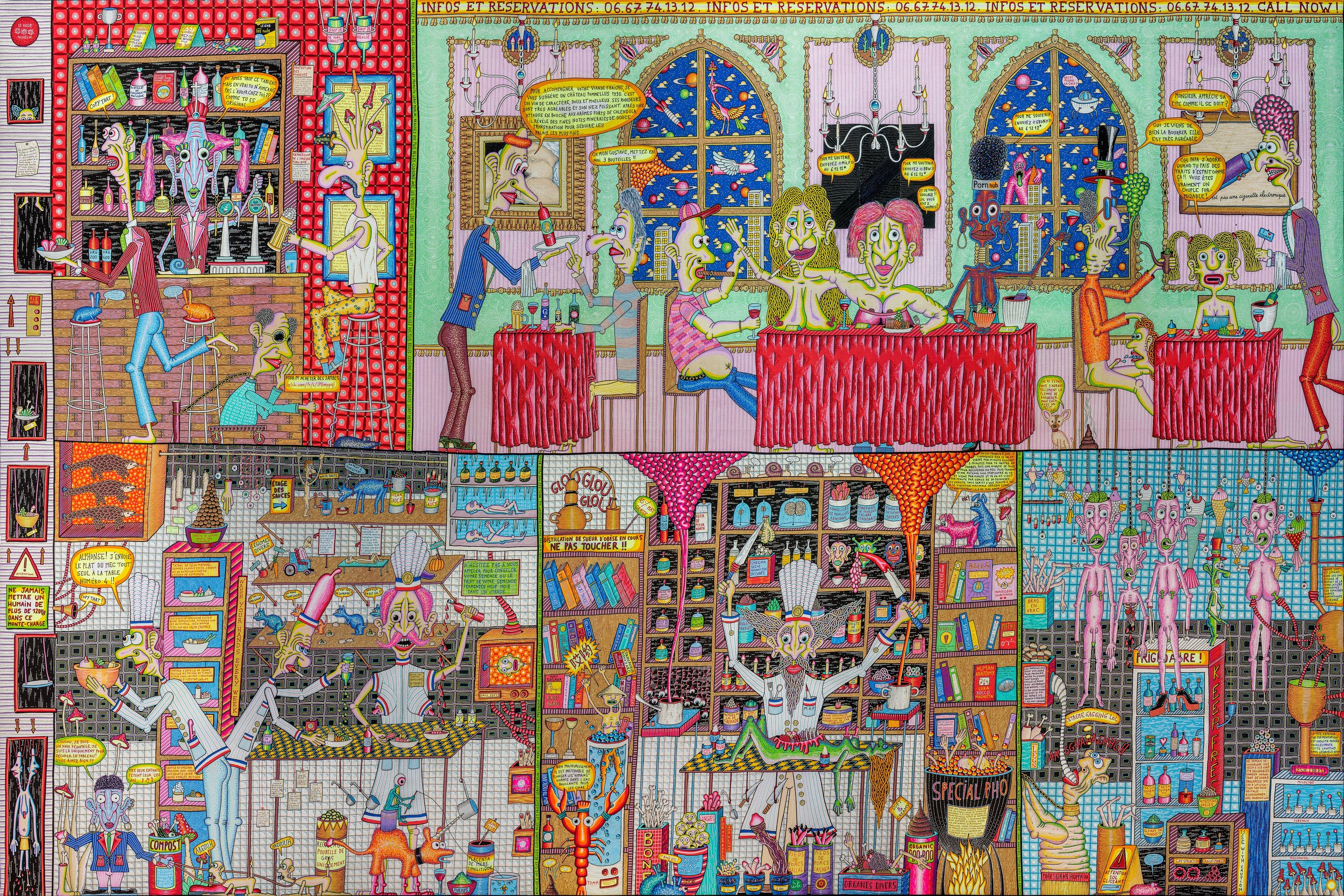
The Restaurant, 2020 Acrylique, Poscas and ink on canvas 130x195cm
Paris 2050, 2019 Acrylique, Poscas and ink on canvas 130x162cm